

Acne can be frustrating enough on its own, but the scars it leaves behind often linger long after the breakouts are gone. Whether they appear as dark spots, raised marks, or pitted areas, acne scars can make skin texture uneven and affect confidence. While home remedies and topical creams can help with discoloration, deeper scarring often requires professional treatment to achieve visible, lasting results.
So, how do you actually get rid of acne scars? Let’s explore what causes them, which treatments work best, and why Microneedling Treatment has become one of the most effective, collagen-boosting solutions available today.
Understanding Acne Scars: Why They Form
Acne scars form as part of the skin’s natural healing process. When inflammation from a breakout penetrates deeply into the skin, it damages the surrounding tissue. To repair this injury, the body produces collagen — a vital protein that gives skin structure and elasticity.
If too little collagen is produced, the result is an atrophic scar or indentation (often called “ice pick” or “boxcar” scars). If too much collagen forms, the result is a raised or hypertrophic scar.
Several factors influence how your skin scars:
- Severity of acne: Cystic and nodular acne are more likely to cause deep tissue damage.
- Genetics: Some individuals are more prone to hyperpigmentation and scarring.
- Skin tone: Darker skin types may develop post-inflammatory hyperpigmentation (PIH) more easily.
- Picking or squeezing: Interfering with healing increases inflammation and scar depth.
Understanding which type of scarring you have helps determine which treatments are most effective for your skin.
Types of Acne Scars
Not all acne scars are the same — and treating them requires knowing what type you’re dealing with.
1. Atrophic Scars (Depressed Scars)
These appear as small pits or indentations in the skin. Subtypes include:
- Ice pick scars: Deep, narrow marks that look like small holes.
- Boxcar scars: Wider depressions with defined edges.
- Rolling scars: Shallow, wave-like depressions.
2. Hypertrophic or Keloid Scars
Raised, firm scars caused by excessive collagen production during healing. These are more common on the chest, shoulders, or jawline.
3. Post-Inflammatory Hyperpigmentation (PIH)
These flat, dark spots are not true scars but rather leftover pigment from inflammation. They often fade naturally but can persist for months without treatment.
Can Acne Scars Go Away on Their Own?
Mild discoloration from acne (PIH) can improve with consistent sun protection and topical brighteners, but textural scars rarely fade completely without professional intervention. Collagen loss beneath the skin’s surface creates permanent indentations that creams and exfoliants can’t correct.
This is where collagen-inducing treatments like microneedling make a major difference. By stimulating new tissue growth, they target the structural cause of scarring rather than just its surface appearance.
How to Get Rid of Acne Scars: Treatment Options
Modern dermatology offers several methods for improving acne scars. The right choice depends on your skin type, scar depth, and tolerance for downtime.
1. Topical Treatments
Ingredients such as retinoids, vitamin C, and alpha hydroxy acids (AHAs) can help improve tone and fade mild discoloration. However, they rarely address pitted or textured scars.
2. Chemical Peels
Professional peels exfoliate the skin to encourage new cell turnover. They help with pigmentation and shallow scars but require repeated sessions and careful aftercare.
3. Laser Resurfacing
Laser treatments can remodel collagen and smooth the surface of the skin. However, they may involve more downtime and aren’t ideal for all skin tones due to pigmentation risks.
4. Microneedling (Collagen Induction Therapy)
Microneedling uses fine needles to create controlled micro-injuries in the skin, triggering the body’s natural healing process and collagen production. It’s one of the most effective and versatile treatments for all types of acne scars, improving both texture and tone.
5. Fillers or Subcision
Some deeper scars can be lifted temporarily with dermal fillers or released through subcision (a minor surgical technique). These are often combined with microneedling for enhanced results.
Why Microneedling Is One of the Best Treatments for Acne Scars
Microneedling has become a go-to option for acne scar correction because it stimulates natural collagen remodeling without removing or damaging the top layer of skin. It’s safe for all skin types, customizable, and offers progressive improvement with minimal downtime.
At Raw Beauty Aesthetics in Woodland Hills, microneedling is performed using the FDA-approved Rejuvapen device, known for its precision and safety. This advanced tool uses fine, sterile needles to create microscopic channels across the skin, prompting the body to produce new collagen and elastin.
The result: smoother texture, refined pores, and visibly reduced acne scars over time.
How Microneedling Works
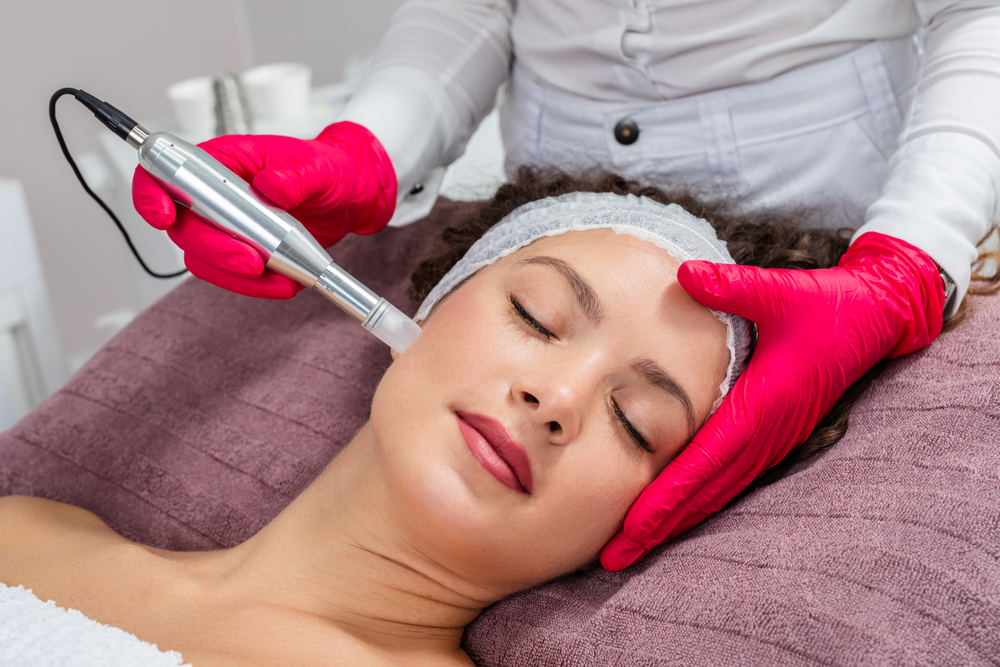
During microneedling, the Rejuvapen device glides across the skin, creating thousands of tiny punctures. These micro-injuries trigger the body’s natural wound-healing process, which occurs in three stages:
- Inflammation: The body sends growth factors and white blood cells to repair tissue.
- Proliferation: Fibroblasts generate new collagen and elastin.
- Remodeling: The skin becomes stronger, smoother, and more even in tone.
Because microneedling doesn’t use heat or lasers, it avoids pigmentation risks and can safely treat darker skin tones.
Additionally, the microchannels created during the treatment enhance absorption of serums and growth factors, amplifying results.
Benefits of Microneedling for Acne Scars
- Stimulates collagen and elastin: Smooths pitted scars and refines skin texture.
- Improves overall tone and clarity: Reduces redness, discoloration, and uneven pigmentation.
- Minimizes pore size: Leaves skin appearing tighter and more polished.
- Safe for all skin types: No risk of thermal damage or hyperpigmentation.
- Minimal downtime: Redness subsides within days, allowing a quick return to daily life.
Beyond scars, microneedling can also improve fine lines, wrinkles, and mild laxity, making it a comprehensive rejuvenation treatment.
What to Expect During Your Microneedling Session
A typical session at Raw Beauty Aesthetics lasts about one hour. Here’s what to expect:
Before the Treatment
- A topical numbing cream is applied to keep you comfortable.
- The skin is cleansed and prepped to ensure a sterile environment.
During the Treatment
- The Rejuvapen is passed evenly across the treatment area, creating controlled microchannels.
- You may experience mild tingling or pressure, but the numbing cream minimizes discomfort.
- In some cases, minor pinpoint bleeding occurs — a normal sign of stimulation.
After the Treatment
- Your skin may appear red or pink, similar to a mild sunburn, for 24–48 hours.
- Post-procedure serums or masks are applied to calm the skin and boost healing.
- Makeup can typically be worn the next day.
Results and Recovery
Most patients notice improvement in skin smoothness and tone within one to two weeks. Collagen production continues for several weeks after each session, so results gradually build over time.
For optimal improvement, a series of three to six treatments spaced four to six weeks apart is recommended. Each session reinforces collagen renewal, leading to visibly smoother, firmer, and more even-toned skin.
Safety and Candidacy
Microneedling is safe for most people, but certain conditions may require caution or postponement. You may not be a candidate if you:
- Are pregnant or breastfeeding
- Have open wounds, eczema, or psoriasis at the treatment site
- Have a history of keloid formation
- Are using prescription retinoids or isotretinoin (Accutane)
A consultation at Raw Beauty Aesthetics in Woodland Hills ensures your treatment is customized to your skin type and sensitivity.
Aftercare Tips
- Keep skin clean and hydrated: Use gentle cleansers and soothing moisturizers.
- Avoid sun exposure: Apply SPF daily to protect new skin cells.
- Skip active ingredients: Avoid acids, retinoids, or exfoliants for at least 5–7 days.
- Stay out of pools and saunas: Prevent bacteria exposure until skin is fully healed.
These steps help your skin recover smoothly and ensure you get the best results possible.
Microneedling vs. Other Scar Treatments
| Treatment | Best For | Downtime | Suitable For All Skin Types? |
| Microneedling | Acne scars, texture, pores | Minimal (1–2 days redness) | Yes |
| Laser Resurfacing | Deep scars, wrinkles | 1–2 weeks | Limited |
| Chemical Peels | Pigmentation, mild texture | 3–7 days | Some limitations |
| Fillers/Subcision | Deep pitted scars | Varies | Yes |
Microneedling stands out as one of the most balanced and versatile options — effective for texture and tone with minimal risk and recovery time.
The Bottom Line: Treating Acne Scars Effectively
Getting rid of acne scars requires more than surface-level care. While creams and exfoliants can fade mild discoloration, they cannot rebuild lost collagen or repair texture irregularities.
Microneedling, on the other hand, activates the body’s own healing power to restore smoother, firmer skin naturally. With repeated sessions, it reduces the depth and visibility of scars, improves pore size, and enhances overall skin health.
If you’re ready to improve acne scars and rediscover smoother, more confident skin, Raw Beauty Aesthetics in Woodland Hills offers professional Microneedling Treatment using the FDA-approved Rejuvapen device. Each session is tailored to your skin’s needs, helping you achieve noticeable texture improvement and lasting radiance with minimal downtime.
FAQs
Can Acne Scars Fade on Their Own?
Mild discoloration may improve naturally, but pitted or raised scars usually require professional treatment to achieve meaningful changes in texture.
How Many Microneedling Sessions Are Needed for Acne Scars?
Most patients benefit from a series of three to six sessions spaced several weeks apart, depending on scar depth and skin response.
Is Microneedling Safe for All Skin Types?
Yes. Because microneedling does not use heat, it is generally safe for a wide range of skin tones, including those prone to pigmentation changes.
How Soon Will I See Improvement After Microneedling?
Early smoothing may appear within one to two weeks, with continued collagen production leading to gradual refinement over several months.
Do Topical Products Help Reduce Acne Scars?
Topical ingredients can support overall tone and fade minor discoloration, but they cannot correct deeper textural scars caused by collagen loss.


 By Brian
